
Zee is estimated to have paid around Rs 225 crore for the complete rights of Radhe. The total revenue that it may earn could be around Rs 135 crore, implying a shortfall of Rs 90 crore.

From helping their employees infected with the Covid-19 virus to vaccinating them or supporting the families of those who might have succumbed to the infection, several companies in India are trying to do their bit in this difficult time. Some have even widened their support net to include all stakeholders as well as an extended community. To the families of the employees it lost to Covid-19, Noida-headquartered IT services and consulting company HCL Technologies is, for instance, paying salary for a year, medical insurance for three years and extending support for their children's education for five years.

Consultants who help lease these properties say this is the steepest decline at least in a decade.

Since April, India has seen multiple strains of the coronanavirus sweep the nation, upending life and businesses alike. Out-of-home retail and discretionary categories such as durables, auto, fashion, lifestyle, hospitality, food services, travel, and tourism have been the worst-hit as Covid cases remain high, leaving state governments with no option but to curtail mobility and economic activity.
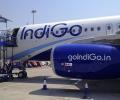
IndiGo, India's largest airline, is in talks to raise fresh funds as a second wave of pandemic has led to collapse in travel demand. The airline may look to raise Rs 3,500-4,000 crore. On Monday, only 97,761 passengers flew. With flyers cancelling bookings, airlines had to put aside flights and operated only 1,306 of them.
According to research firm IDC, a slowdown in smartphone shipments began showing up as early as late February, though companies insist that the March quarter was fine, albeit on a low base.
'I remain optimistic that 2021 will be better than 2020 because we have visibility of vaccinations this year.'
Some companies argue that the culture of staying, working and learning at home will persist for a while, altering lifestyle habits of consumers.
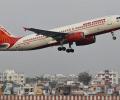
The timeline for disinvestment of Air India and Bharat Petroleum Corporation (BPCL) may be pushed by two to three months due to impact of the second Covid-19 wave. However, the government is confident of wrapping up the sale of the two companies by FY22 and meeting the disinvestment target of Rs 1.75 trillion. This will be achieved by sale of government stake in core and non-core public sector undertakings (PSUs).

According to government data, the Centre procured only 35,179 ventilators out of the 50,000 originally ordered.
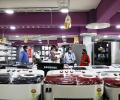
Durable goods companies and retailers say online sales won't compensate for the fall in offline sales.

The fairy tale turnaround story has, however, taken a few knocks after a second wave of the pandemic has brought a series of default notices and has posed the toughest test for the 55-year old Singh to save the airline he founded and sold to the Marans only to assume control later.
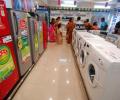
Maharashtra, which contributes between 12 and 15 per cent of appliances sales, announced lockdown-like curbs, meaning there will be no business for the second half of the month as well from the state.
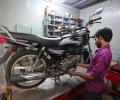
The company will utilise this time to carry out maintenance work at its manufacturing plants.

'Post-Covid world will be different from the pre-Covid world.'

According to the order, all factories producing essential goods and services will remain operational at full capacity.
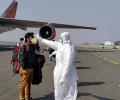
Within two weeks of many airlines deciding to roll back salary cuts encouraged by a steady increase in traffic flow, a second wave of coronavirus along with rules of compulsory RT-PCR test has hit forward bookings. The fears of last summer, when the pandemic had overturned all the wisdom of airline boardrooms, have returned to haunt the aviation industry. According to an official in the Ministry of Civil Aviation, flight occupancy is down to 60 per cent from 70 per cent in the first week of March. Airline lobby group IATA estimates that low cost airlines need to fly at 80 per cent occupancy to be profitable.
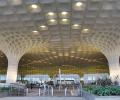
Adani Airports is planning to centre its airport business around Mumbai and Ahmedabad by developing them as gateway airports, feeding them with traffic from other airports in the company's portfolio. The Ahmedabad-based conglomerate - with investments in logistics, transportation, utilities and energy - intends to spend Rs 35,000 crore in the airport business in the next five years. This forms the bulk of the conglomerate's total capex of Rs 50,000 crore. According to a presentation given by the company in an investor call with Bank of America, gateway airports of Mumbai and Ahmedabad will be connected with the feeder airports of Lucknow, Guwahati, Trivandrum, Jaipur and Mangalore.
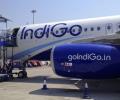
IndiGo has proposed to issue 185,000 shares worth to Chief Executive and Whole-time Director Ronojoy Dutta under the company's Employee Stock Option Plan (ESOP). The shares that can be exercised at a price of Rs 765 apiece is worth Rs 14,15,25,000. Dutta can exercise 25 per cent of that at the end of first year, 35 per cent at the end of second year, and the remaining in December 2023 when his current tenure ends.

'The government has assured us support.' 'The civil aviation ministry have told us that whatever we need, we will get prime airport slots and bilateral rights.'
 © 2026 Rediff.com - Advertise with us - Disclaimer - Privacy Policy - Sitemap - Feedback - About us - Terms of use - Grievances